
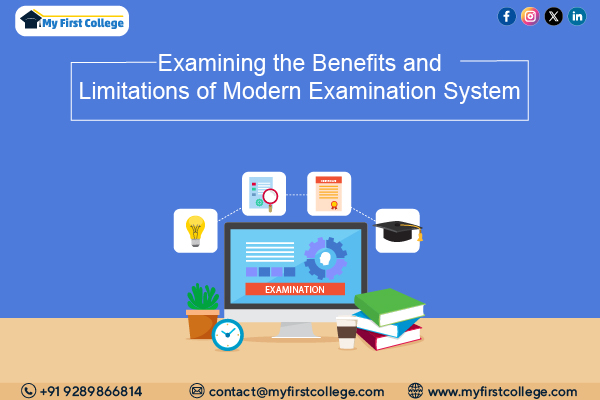
Examining the Benefits and Limitations of Modern Examination System
In India, the modern examination system has undergone significant transformations over the years. This system encompasses various methods of assessing students' knowledge, skills, and abilities, ranging from traditional pen-and-paper tests to online assessments. These transformations have their own advantages and disadvantages.
Changes in the modern examination System
In today's world, technological advancement can be seen in every field of life, and due to these advancements, many examinations are now conducted online. Computer-based tests (CBT) have become popular due to their efficiency, scalability, and reduced chances of malpractice. Traditional subjective evaluation methods are gradually being replaced by objective evaluation techniques, such as multiple-choice questions (MCQs) and computer-based assessments. The utilization of AI and data analytics has increased in the modern examination system. Both are used to analyze exam patterns, predict outcomes, and personalize learning experiences for students.
Various security measures are implemented to maintain the integrity of examinations. These measures include biometric authentication, CCTV surveillance, and the use of secure online platforms to prevent cheating and ensure fairness. A constant effort is being made to make examinations more accessible to candidates with disabilities. Special accommodations, such as extra time, assistive technologies, and alternative formats, are provided to ensure equal opportunities for all test-takers.
Advantages of the modern examination system
- Modern examination systems provide a standardized method to evaluate students' understanding of the curriculum. This helps in maintaining uniformity across the education system and ensures fair evaluation.
- Exams offer a quantifiable measurement of students' performance, making it easier to gauge their understanding of the subject matter.
- Computerized examination systems can streamline the assessment process, reducing the time and resources required for grading and result processing. A standardized assessment system is achieved.
- Technology-driven assessment methods allow for adaptive testing, where questions dynamically adjust based on the student's responses, providing a more accurate measure of their proficiency.
Disadvantages of the modern education System
- The current examination system tends to overemphasis on memorization than critical thinking and practical application of knowledge. This can hinder the development of creativity and problem-solving skills among students.
- Exams may not accurately assess the diverse range of skills and talents that students possess. It has a limited scope of assessment. They often focus on academic knowledge and may not adequately evaluate other important attributes such as communication skills, creativity, and emotional intelligence.
- The current examination system may perpetuate inequalities based on socio-economic factors. Students from privileged backgrounds or those who can afford expensive coaching classes may have an advantage over others, leading to inequality in access to resources.
- The emphasis on exam scores as the primary measure of success can lead to a narrow definition of achievement, overlooking other valuable qualities and talents that students possess.
Conclusion
The modern examination system has both advantages and disadvantages associated with it. While they are effective ways of evaluating students's knowledge, they can also cause stress and anxiety. It may not accurately reflect a student's overall understanding of a subject. The need for reform in the examination system is urgent, as it is causing significant stress and anxiety among students. To address these issues, there have been ongoing discussions and initiatives to reform the examination system, focusing on promoting holistic assessment methods, reducing stress levels, and fostering a more inclusive and equitable learning environment.
For detailed information about the courses offered under WILP, eligibility criteria, admission process, and other relevant details, aspirants can visit "My First College."
Read Also:
Decoding the MBA Admission Journey: From Application to Acceptance
Pathways to Employment: The Most Valuable Online Courses for Job Seekers
The Best Engineering Courses to Shape Tomorrow World
Advantages and Disadvantages of Pursuing an MBBS Degree Abroad
Top Courses
Updates
-

Part Time MBA Programs in India - Unlimited guidelines 2023
September 09, 2022 -

Can I Pursue a Part Time B.Tech after Getting My Diploma?
September 09, 2022 -
7 Best Universities Offering Part-time M.Tech
September 05, 2022 -
Best Part-time B Tech University/ Colleges In India?
June 28, 2022