
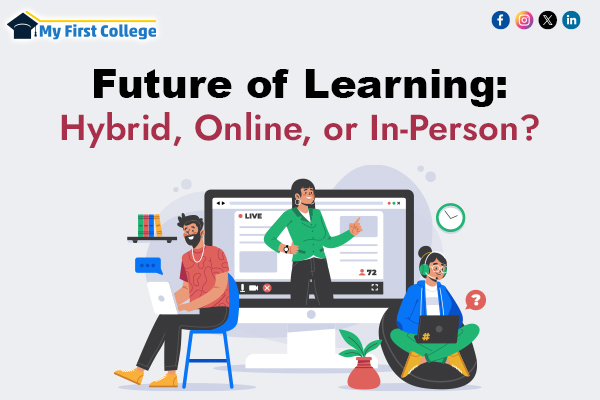
Future of Learning: Hybrid, Online, or In-Person?
Introduction: Redefining the Learning Landscape
In recent years, the future of learning has undergone an intense transformation. This is reshaping how knowledge is accessed, delivered, and experienced. Triggered by rapid technological advancements and accelerated by global events like the COVID-19 pandemic, traditional learning—once defined by face-to-face instruction within fixed classroom walls—has expanded far beyond its former boundaries.
Today’s education environment is more dynamic and flexible than ever. It is fueled by the rapid increase of digital platforms, online resources, and innovative teaching tools. This shift has given rise to new learning models: fully online programs, hybrid or blended learning formats, and the enduring appeal of in-person instruction. Each approach offers distinct advantages, meeting the diverse needs and lifestyles of modern students.
As educators, students, and institutions navigate this evolving landscape, the fundamental question emerges: What does the future of learning look like? Understanding the implications of hybrid, online, and in-person modalities is crucial for designing inclusive, resilient, and effective education systems that can adapt to changing demands and unpredictable challenges.
In-Person Learning: The Traditional Powerhouse
In-person learning, often regarded as the traditional cornerstone of education, retains significant relevance and impact despite the growing popularity of online and hybrid education models. Rooted in centuries-old practices, classroom –based education is valued for its ability to foster direct human interaction, create structured learning environments, and deliver holistic educational experiences.
Despite advancements in educational technology, in-person learning remains the preferred choice for many because it addresses more than just academic needs; it nurtures confidence, critical thinking, empathy, and leadership. For young students and those requiring additional guidance or structure, the classroom offers an irreplaceable environment for growth and discovery.
Educational institutions worldwide continue to invest in physical infrastructure, teacher professional development, and campus life, underscoring the belief that direct engagement—not just content delivery—lies at the heart of transformative education.
Know More About: Top Medical Universities in India
Online Learning: Flexibility and Accessibility
Online learning has revolutionized education by offering unparalleled flexibility and accessibility to learners across the globe. Unlike traditional classroom settings, online courses allow individuals to access educational content anytime and anywhere. This enables them to tailor their study schedules according to personal and professional needs. Parents or those balancing multiple responsibilities can learn at their own pace without being bound by fixed class timings.
In terms of accessibility, online education transcends geographical barriers, granting students from remote or underserved areas access to high-quality courses offered by leading institutions worldwide. The democratization of education promotes inclusivity and opens doors to opportunities that might otherwise be limited by location or mobility constraints. Furthermore, the use of advanced digital platforms facilitates interactive learning through discussion forums, video conferencing, and collaborative projects, enhancing engagement despite the virtual environment.
Hybrid Learning: The Best of Both Worlds?
Hybrid learning, also known as blended learning, seamlessly integrates in-person instruction with online components. It aims to harness the strengths of both formats and minimize their respective drawbacks. This educational model is gaining wide appeal as institutions and learners seek greater flexibility, engagement, and personalization in the learning experience.
This model encourages deeper interaction during in-person classes, reserving that time for discussions, group work, and hands-on activities, while online components provide opportunities for review and self-paced study. Hybrid learning also ensures educational continuity during emergencies and makes learning more inclusive for those balancing work, family, or health constraints. By blending traditional and digital approaches, hybrid education provides a flexible, engaging, and effective learning experience tailored to diverse needs.
Student and Teacher Perspectives: What Works Best?
Recent research highlights a blend of preferences and experiences among students and teachers regarding learning modes. Students generally appreciate the flexibility, variety of resources, and opportunities for self-paced learning that online education provides; this fosters autonomy, digital literacy, and, for many, satisfaction with their educational experience.
Students with high motivation and self-efficacy tend to excel in online environments, using diverse strategies to engage with material and develop skills relevant for future work and lifelong learning. Contributing factors to student satisfaction include well-organized course structures, effective communication, timely feedback, multimodal teaching methods, and a supportive instructional presence.
However, challenges persist, especially for those lacking access to reliable internet or a conducive learning environment at home. Many students report difficulties with concentration, increased distractions, and feelings of isolation. Social interaction, immediate clarification, and hands-on experiences— a distinguishing character of in-person learning—remain highly valued.
Teachers, meanwhile, recognize the need for robust course design, comprehensive planning, and adept technological skills to create engaging online experiences. While online platforms enable personalized feedback and innovative pedagogical approaches, teachers often face hurdles in student engagement, assessment integrity, and sustaining interaction. Both groups acknowledge that a balanced, well-supported hybrid model may address these needs by blending flexibility with the social and interactive strengths of traditional classrooms.
Know More About: Top Universities and Colleges in India
Challenges in Each Learning Model
In-person –
- Often lecture-driven and teacher-centric, which can hinder critical thinking and active engagement.
- Lacks personalization, making it difficult to cater to diverse learning styles and paces.
- Emphasis on rote learning can undermine deep comprehension and problem-solving skills.
- Passive environments and rigid formats can lead to boredom and disengagement.
- Reliance on physical classrooms limits access for students in remote or underserved areas.
- Often slow to adopt digital tools, which reduces preparedness for the modern workforce.
- Budget limitations or outdated materials hinder dynamic, relevant learning.
- Poor teacher-student ratios can reduce individual attention and effectiveness.
- Limited focus on communication, teamwork, and real-world applications.
Online –
- Lack of internet access or devices in some regions limits participation.
- Less face-to-face engagement can lead to isolation and affect socio-economical development.
- Learners must be self-motivated and organized; otherwise, they may fall behind.
- Variability in course quality and potential for distractions can affect learning outcomes.
- Difficulties in monitoring honest assessment and ensuring fairness.
- Challenges in replicating laboratory work, arts, or other practical activities virtually.
Hybrid
- Requires investment in both physical and digital infrastructure and teacher training.
- Scheduling and balancing in-person and online activities can be logistically challenging.
- Students lacking reliable access to technology remain disadvantaged.
- Ensuring uniform engagement and quality across both modes can be difficult.
- Both groups may struggle with managing different expectations, tools, and workloads.
- Designing fair and effective assessment methods that work well for both online and in-person components.
- contracts
- penalties
Know More About: Top Engineering Universities in India
Which Model is the Future of Learning?
The future of learning is increasingly centered on hybrid and flexible models that blend the strengths of in-person, online, and immersive technologies. Current trends show that while online education provides flexibility and accessibility and in-person learning retains value for social and practical development, hybrid learning is emerging as the favored approach for 2025 and beyond. Hybrid models enable personalized, adaptive education by leveraging AI, learning analytics, and interactive technologies such as AR/VR, making learning more engaging, inclusive, and tailored to individual student needs.
Education providers are increasingly adopting blended solutions to accommodate diverse learning preferences and life situations, maximize engagement, and ensure accessibility for remote or disadvantaged learners. The infusion of technology—from AI-powered personalization to immersive virtual experiences—further supports this shift, allowing for real-time adaptation, skill-based micro-credentials, and ongoing lifelong learning.
In summary, the future of learning is not about choosing between online, in-person, or hybrid models—but about integrating them. This integration harnesses the advantages of each mode to create a dynamic, resilient, and future-ready education system that prepares learners for a rapidly evolving world.
Conclusion: Finding the Right Balance
Striking the right balance in education means embracing models that unite the strengths of both in-person and online learning. As we navigate the future of learning, hybrid models stand out by offering flexibility, accessibility, and personalized engagement, allowing students to benefit from structured classroom interactions while enjoying the convenience of digital resources. This approach caters to diverse learning styles, bridges geographic and technological gaps, and prepares learners for a tech-driven future. While challenges such as equitable access and curriculum alignment remain, thoughtful implementation—supported by effective communication, smart technology, and ongoing teacher training—can ensure hybrid learning delivers on its promise of adaptability and excellence in a changing world.
To learn more about the various courses, entrance exams, and colleges, visit our site for the latest update. We specialize in education-related content. To learn about Modern Education System in India, The Impact of AI and Technology on Modern Education, BBA vs BCA: Which Degree is Right for You in the Future? and more, visit our site.
Read Also:
Mangalayatan University Jabalpur Madhya Pradesh
Sikkim Professional University
Top Courses
Updates
-

Part Time MBA Programs in India - Unlimited guidelines 2023
September 09, 2022 -

Can I Pursue a Part Time B.Tech after Getting My Diploma?
September 09, 2022 -
7 Best Universities Offering Part-time M.Tech
September 05, 2022 -
Best Part-time B Tech University/ Colleges In India?
June 28, 2022