
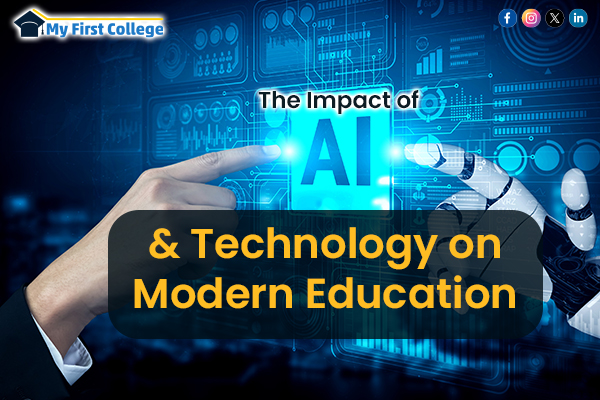
The Impact of AI and Technology on Modern Education
Introduction: The Digital Transformation of Education –
Digital transformation in education represents a fundamental re-thinking of the way teaching, learning, and the mechanisms of educational management become available, which is driven by the developed and integrated use of technology in every corner of the academic process. This is more than just about the digitization of textbooks or the publishing of content online, it is about embracing technologies such as AI in education, big data, cloud computing, virtual learning environments and more to deliver more engaging, effective and personalized learning experiences to the students.
The impact of digital transformation is visible across multiple dimensions: it enhances the effectiveness of teaching, streamlines administrative processes, and expands access to quality education regardless of geographical barriers. Technologies like learning management systems, adaptive learning platforms, and online assessment tools—many of which are powered by artificial intelligence in education—empower educators to design innovative curricula and tailor instruction to individual needs, while students benefit from flexible, interactive, and self-paced learning opportunities.
How Is AI Revolutionizing Learning Environments?
Artificial intelligence in education is fundamentally transforming learning environments by making education more personalized, efficient, and engaging for both students and educators.
1. Personalized and Adaptive Learning: Artificial Intelligence in Education is key for offering a personalized and adaptive learning experience. Such platforms use AI to continuously track each student’s progress and prescribe the right lecture, classwork and homework for each student, in real time, to his or her specific style of learning. This learning-centred form of AI provides the ability to learn a topic more effectively and allows the students to advance through the material at their own pace, promoting greater comprehension and retention.
2. Intelligent Tutoring Systems and 24/7 Support: One of the key benefits of AI in learning is the emergence of intelligent tutoring systems that offer one-on-one instruction, providing customized explanations, feedback, and guidance tailored to each student’s cognitive processes. AI chatbots and virtual assistants—integral components of artificial intelligence in education—are available around the clock, answering questions, guiding problem solving, and supporting learning beyond the traditional classroom.
3. Automating Administrative and Routine Tasks: AI in education eliminates the manual grading, time tabling, and reporting process, thereby lessening the burden on teachers. Such automation enables teachers to spend more time focusing on direct student interaction and relevant instructional tasks.
4. Engaged and Interactive Learning: One of the key features of AI in learning is its role in creating more active education. AI-powered educational games, simulations, and virtual worlds, for example, provide deeply interactive experiences — experiences that maintain student engagement and participation. These tools respond to student input, provide immediate feedback, and improve understanding of difficult topics.
5. Improved Accessibility and Inclusivity: Artificial intelligence in education also leads to improved inclusivity. Assistive technologies made possible by AI—like speech recognition, predictive text and instant translation—also provide support to disabled or linguistically diverse students, leading to more inclusive and equitable learning.
6. Actionable Insights and Data-Driven Instruction: By analyzing vast amounts of educational data, AI in learning provides actionable insights for teachers. These insights help identify learning gaps, customize instruction, and enhance student outcomes, making teaching more targeted and effective.
Read More: Top MBA Colleges in India
The Road Ahead: Emerging Trends and the Future of AI in Education –
The future of AI in education is rapidly unfolding, marked by deeper integration, personalization, and a focus on bridging the gap between learning and workforce needs. Here are the most significant trends and what lies ahead –
1. AI Moves from Hype to Serious Implementation: Emerging AI technologies are enabling hyper-personalized learning experiences. AI agents and adaptive platforms assess student performance in real time, recommending tailored content, adjusting study plans, and providing instant feedback. This ensures that learning is not only individualized by ability, but also by interests, goals, and even emotional cues.
2. Hyper-Personalization and Adaptive learning: AI agents and generative platforms allow hyper-personalized learning. They are to customize content, feedback, and learning paths according to needs and abilities and interests of the learner. It is anticipated that this trend will form the basis for educations at all levels.
3. Inclusive and Accessible Education: Generative AI in education makes education more inclusive by creating audio materials, visual ads, and subtitles, supporting speech-to- and real-time translation. Such tools help make it easier for both students with disabilities and those who speak languages other than English to get to learning materials.
4. Generative AI for Content Creation: Generative AI in education is a step-change in content generation, providing your students with the necessary learning content, from textbooks to tests and everything in between, helping to tailor the learning experience to their specific education needs. This technology is helping to streamline educators’ ability to update and personalize materials for a variety of learner needs.
5. Scalability and Global Reach: AI-powered platforms, combined with the proliferation of smart devices and high-speed connectivity, are making quality education more scalable and accessible worldwide. Hybrid and online learning models will continue to benefit from AI-driven customization and support.
Read More: Top PhD Universities in India
Conclusion: Striking a Balance Between Technology and Human Touch –
Ultimately, the future of education depends on a thoughtful integration of innovation and tradition. By embracing the possibilities of artificial intelligence in education as a powerful tool—while preserving the irreplaceable value of human connection—educators can ensure that learning remains both technologically advanced and deeply human. This harmonious approach prepares students not just for the demands of a digital world but for the complexities of life.
Discover your perfect college match with My First College! Explore detailed course guides (like Distance B.Tech vs Regular B.Tech), admission tips, and career insights (like Career After CSE Diploma)—all in one place. Start your educational journey today by browsing top colleges and comparing programs. Visit us now and take the first step toward your bright future!
Read Also:
Mangalayatan University Jabalpur Madhya Pradesh
Sikkim Professional University
Top Courses
Updates
-

Part Time MBA Programs in India - Unlimited guidelines 2023
September 09, 2022 -

Can I Pursue a Part Time B.Tech after Getting My Diploma?
September 09, 2022 -
7 Best Universities Offering Part-time M.Tech
September 05, 2022 -
Best Part-time B Tech University/ Colleges In India?
June 28, 2022